myths and
legends
Ethra and The Taras Foundation
Taranto, the only Spartan colony in Magna Graecia, was, according to historical tradition, founded by the Partheni, illegitimate children born during the wars between Sparta and Messenia, who revolted to claim their full political rights.
The myth tells that
the Spartans, to quell the Partheni revolt, consulted the Oracle of Delphi, who advised them to send the Partheni west to found a new city. Falanto, their leader, received an enigmatic prophecy: “When you see rain falling from a clear sky, you will conquer the land and the city.” Having set out without understanding the meaning of the prophecy, they sailed aimlessly, and after a difficult crossing and a shipwreck, a dolphin saved Falanto, and the Parthenians landed in the Gulf of Saturo. Here Falanto falls asleep on the lap of his wife Ethra (Clear Sky), who wakes him by weeping: her tears were the “rain from a clear sky” of the prophecy. Thus he founded Taras, in honor of the hero, son of Poseidon and the nymph Satyria.
The landing site of the Partheni and the founding place of the city of Taranto is today’s Saturo, where a vast archaeological park stands on the promontory; it was named in honor of the nymph Satyria, mother of Taras, who is still depicted today riding a dolphin, the symbol of the city of Taranto.
Skuma
The myth of the Sirens in Taranto is also linked to the legend of Skuma, a young woman who was saved by the Sirens and became their queen.
The legend tells that
in the city of Taranto there lived a young married couple: she was beautiful, and he was a strapping fisherman who neglected his wife because of his work; the young woman then cheated on him with a wealthy gentleman. The husband, upon discovering her betrayal, throws her into the sea, but the Sirens save her and, enchanted by her beauty, crown her queen of their realm, giving her the name Skuma (Foam).
The husband, now in love and repentant, goes every day to weep at the spot where Skuma sank.
The Sirens, intrigued, make him fall into the sea and take him to their enchanted castle, where Skuma recognizes him and spares his life. The husband is then brought back to shore and, with the help of a fairy, tries to free Skuma; the fairy reveals to him that to succeed, his wife must steal a white coral flower from the Sirens’ garden. Skuma succeeds, and she and the fisherman flee; the fairy uses the magical flower to create a wave that sweeps the Sirens away from the Gulf of Taranto.
There are two different endings to this legend:
– In one, the fairy saves the couple and brings them safely back to shore.
– In the other, the fisherman disappears, swept away by the wave, and Skuma becomes a nun.
The statues of the Sirens by artist Francesco Trani, which can be admired along the Taranto waterfront, are dedicated to the legend of Skuma. The Sirenuse of Taranto are also associated with the city’s founding, which, according to myth, was established by Taras, son of Poseidon and the nymph Satyria. Taras is depicted as a hero riding a dolphin, and his legend is still celebrated in Taranto today.
Orpheus and the Sirens
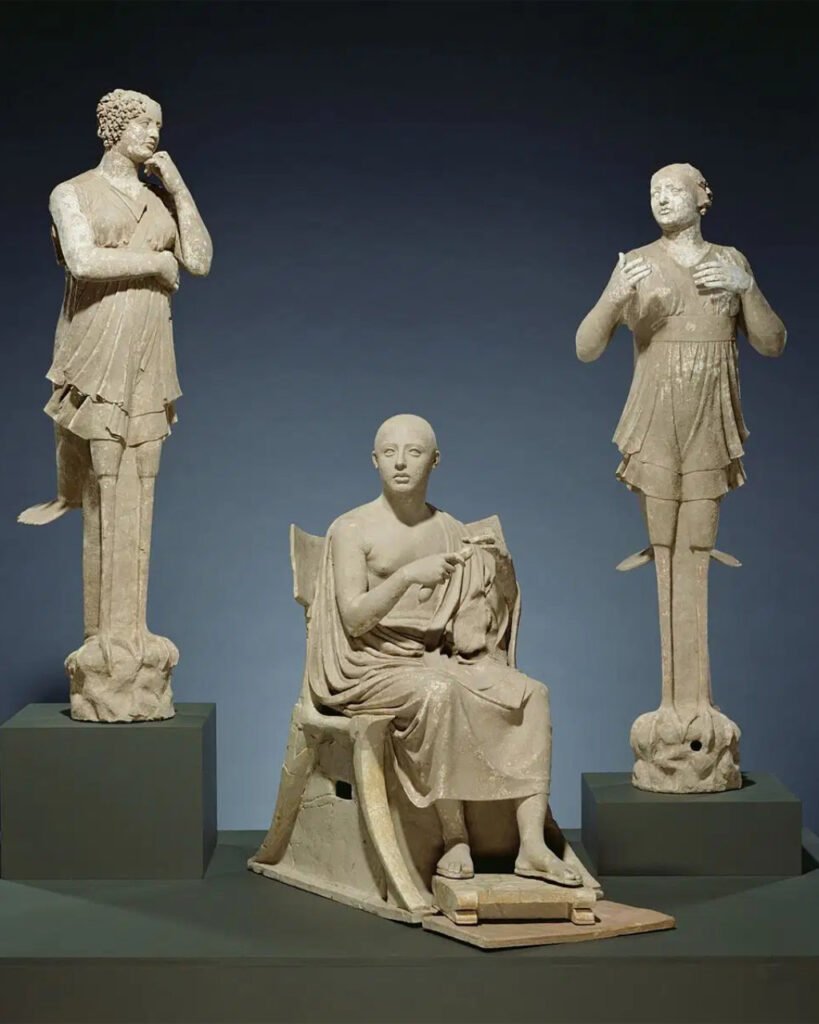
The myth of Orpheus and the Sirens celebrates the triumph of music over deadly deception. In the Pythagorean culture of Magna Graecia, of which Taranto was the capital, this myth represents the victory of civilization, reason, and harmony over chaos and death, and over the forces of nature.
The Argonauts’ passage near the island of the Sirens is one of the most famous episodes of their return journey, recounted in particular in Apollonius Rhodius’s Argonautica. The mythical creatures, described as half-woman and half-bird in Greek tradition, lured sailors with their irresistible song, causing them to shipwreck on the rocks of their island.
The myth tells that
the Argonauts—Jason and his companions—returning with the Golden Fleece, upon reaching the island of the Sirens, managed to save themselves thanks to the presence of Orpheus, the legendary musician and poet aboard the ship Argo.
When the Sirens began to sing, Orpheus played his lyre and sang with such mastery that he drowned out the sweet and fatal voices of the mythical creatures, filling the sailors’ ears and thus saving the heroes from their deadly seduction.
Enchanted by Orpheus’s superior harmony, the Sirens stopped singing and, stunned by their defeat, committed suicide by throwing themselves into the sea.
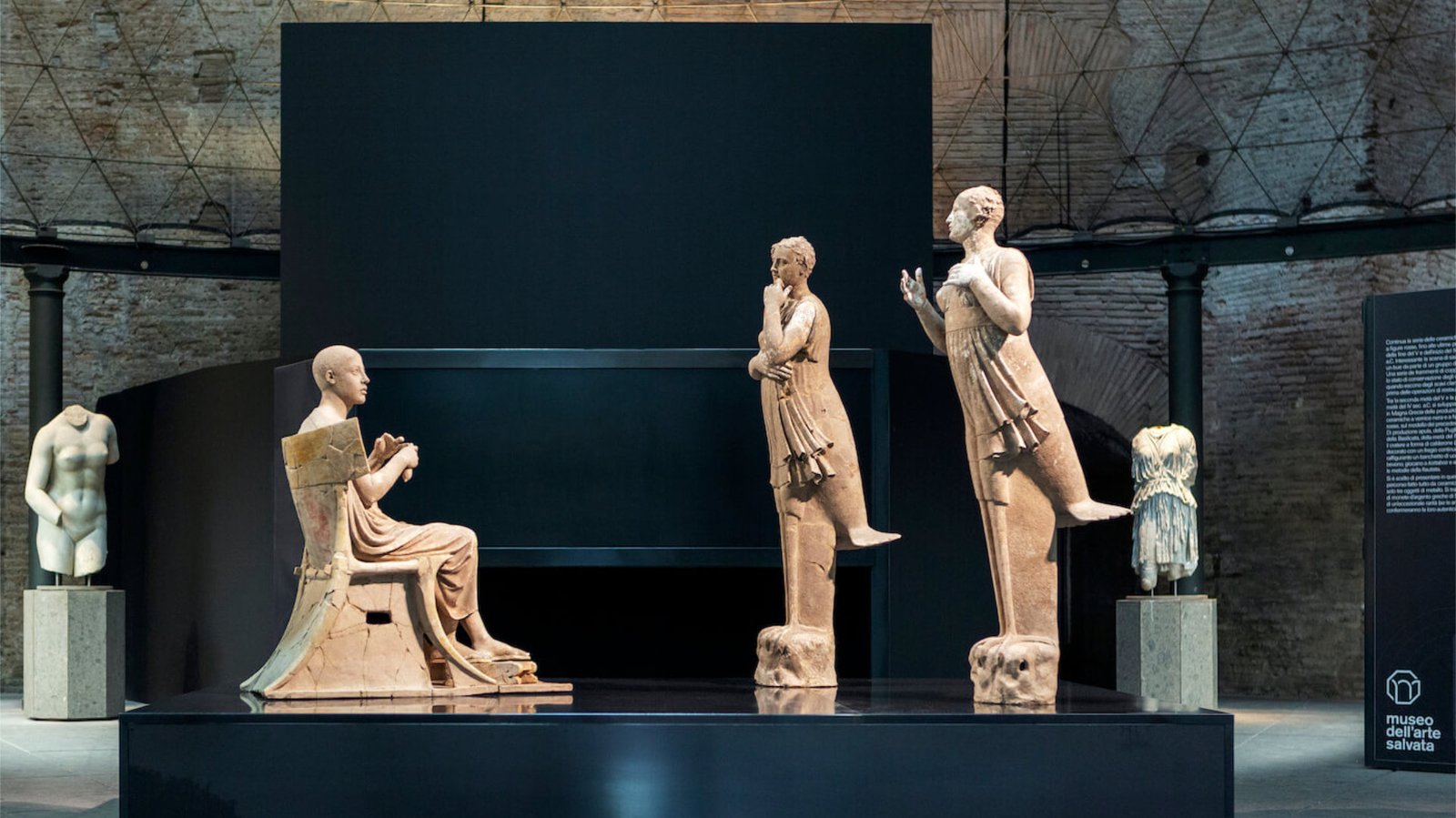
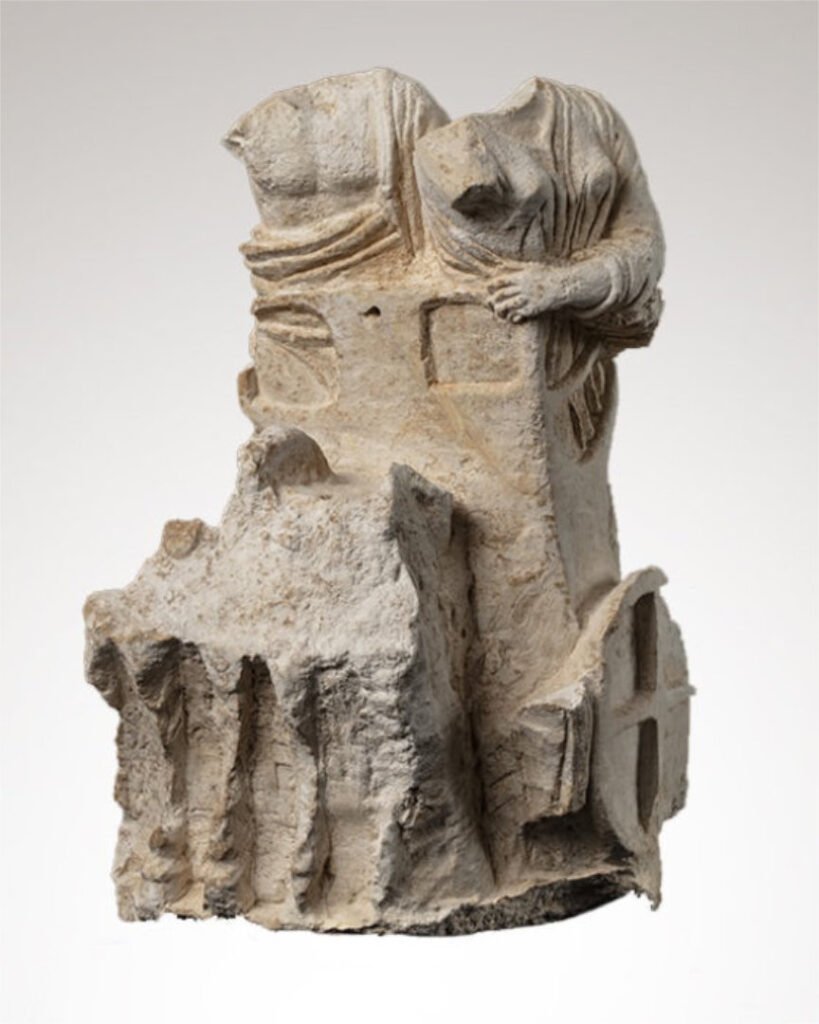
La scena è rappresentata in un gruppo marmoreo esposto al MArTA (Museo Archeologico Nazionale di Taranto), dove lo si può ammirare, con Orfeo seduto su un trono e le Sirene raffigurate come uccelli rapaci con corpo di donna.
The scene is depicted in a marble sculpture on display at MArTA (the National Archaeological Museum of Taranto), where it can be admired: Orpheus is seated on a throne, and the Sirens are depicted as birds of prey with women’s bodies.
Satyria and Taras
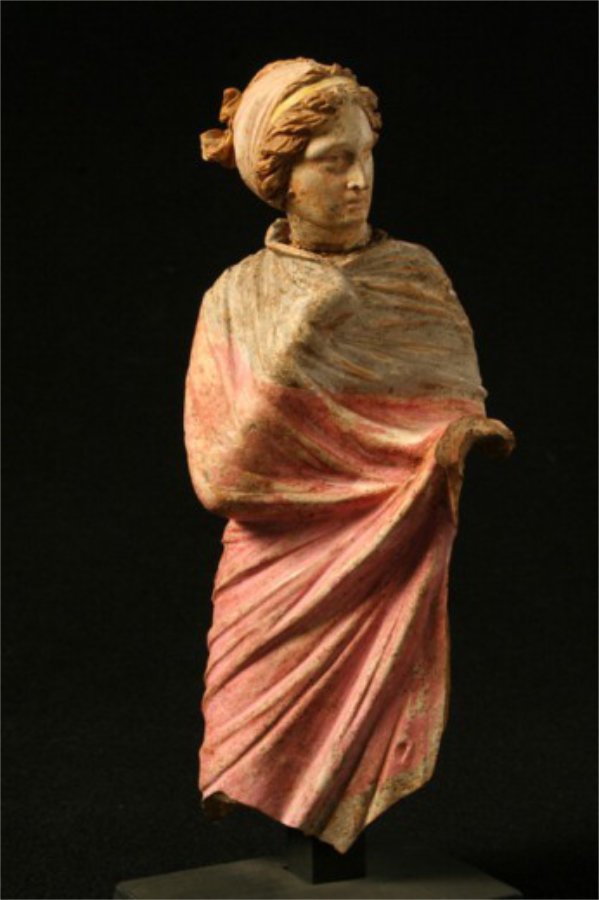
The myth of Taras and Satyria is closely linked to the identity of the city of Taranto. Taras is the son of Poseidon, god of the sea, and the nymph Satyria. According to legend, Taras was the mythical founder of the city of Taranto, which to this day has as its official symbol a boy riding a dolphin. The myth represents the close connection between the city and the sea.
The myth tells that
the nymph Satyria lived in the territory of Saturo, an enchanted place overlooking the sea near Taranto, and Poseidon, god of the sea, fell in love with her; from their union a son was born, Taras, who grew up strong and brave, but one day, while riding a wild horse, he was thrown into the sea. A dolphin sent by his father saved him, carrying him ashore on its back to the very spot where Taras later founded the city bearing his name, and from then on, as a harbinger of good fortune, he became a hero revered by the inhabitants.
Centuries later, Phalantus arrived in those same lands, which he colonized with his companions, and thus the myth of Taras and Satyria is intertwined with the story of Phalantus and the historical Spartan founding of the city of Taranto.